One profile per vehicle
Registration, documents, maintenance, tyres, loading, and losses are attached to the vehicle instead of scattered across registers.
LITWay
A vehicle’s history is spread across maintenance work, tyre records, loading activity, and loss records. LITWay brings that information into one vehicle profile so transporters on port corridors, mining routes, and regional highways know what each truck really costs.
For transporters, truck owners, and contractors managing fleets in Africa and India
+91 99070 36906 · WhatsApp works from any country
What changes for your business
A clear history for every truck: maintenance, tyres, loading, and losses in one vehicle profile, for transporters who need to know what each vehicle really costs.
Registration, documents, maintenance, tyres, loading, and losses are attached to the vehicle instead of scattered across registers.
Service history and recurring issues are visible per vehicle, so work is scheduled rather than reactive.
Tyre purchases, fitments, rotations, and removals are recorded, which is where a large share of fleet cost hides.
Damage, shortages, and other losses are recorded against the vehicle and trip for review.
What it covers
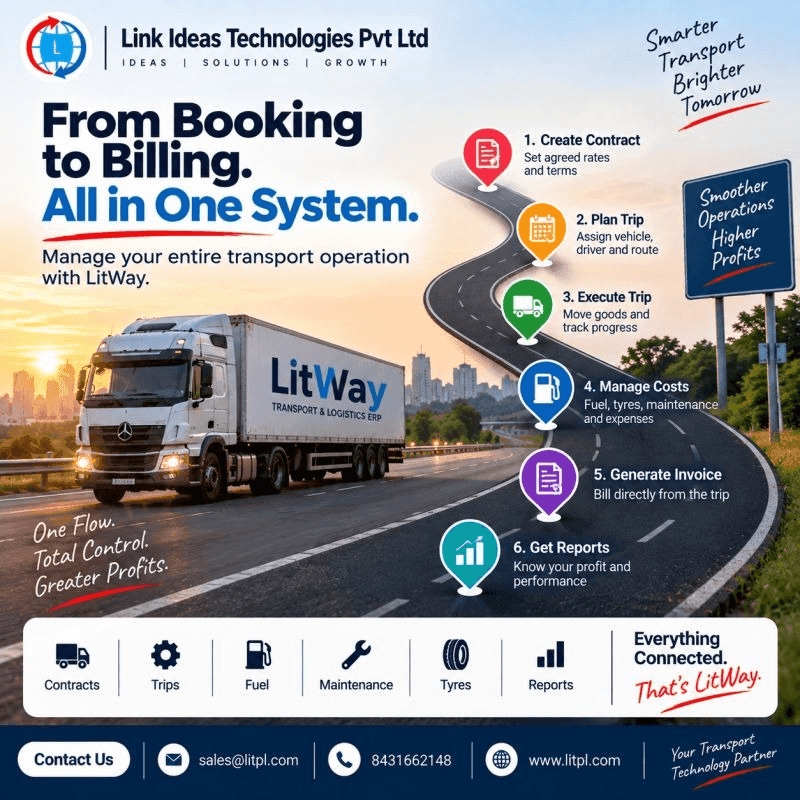
The five records that explain what each vehicle costs and where it is. GPS tracking, fuel, and freight billing are separate requirements and are scoped only if you need them.
Registration, documents, renewal dates, and the full record of each truck, trailer, or machine in one place.
Service history, work done, parts used, and recurring issues per vehicle, so maintenance is planned rather than reactive.
Tyre purchases, fitments by position, rotations, and removals, which is where a large share of fleet cost hides.
Record what was loaded on each trip against the vehicle, with the document references the operation uses.
Damage, shortages, and other losses recorded against the vehicle and trip for follow-up and review.
An example workflow
Keep the key records for each truck or vehicle together.
Record maintenance and tyre information as part of the vehicle’s ongoing history.
Manage loading and record losses against the vehicle for later review.
The sequence, approvals, and handovers are adapted to your operation during discovery.
Decisions we agree in discovery
These are answered with your documents before a proposal is written, so the quote reflects your business rather than a generic package.
Trucks, trailers, and equipment, and which documents and dates must be tracked per vehicle.
In-house workshop or outside garages, tyre brands and positions, and how work is authorised.
How loading is recorded today and whether trip, fuel, or freight-billing requirements should be part of a later phase.
Who updates records: drivers, workshop staff, or the office, and at how many depots.
Cost per vehicle, maintenance due, tyre life, and loss reports your management reviews.
How LITPL implements it
Proposals show licences, services, and support separately, in the currency you contract in.
Hosting, delivery, and support
Records are updated from the office or workshop; hosting options are confirmed during discovery.
Discovery, configuration, training, and support run over video calls, screen sharing, and WhatsApp in a working window that overlaps your day. On-site visits are arranged for go-live or plant and yard walkthroughs when they add value.
WhatsApp is the fastest channel. Email and phone are answered Monday to Saturday in the agreed window; extended support windows are agreed per project.
Working hours in your time zone and the full delivery model are on the Where we work page.
Questions buyers ask
Start with the number and types of vehicles you own, the records you maintain, and the people responsible for updating them. Use a real vehicle history to check how the proposed workflow fits your operations.
LITWay focuses on vehicle records: profile, maintenance, tyres, loading, and losses. Tracking, fuel, and freight billing are discussed as separate requirements and scoped if needed.
Yes, each unit gets its own profile. Bring your full asset list so the setup covers everything you maintain.
Transporters that also need finance, purchasing, and spare-parts stock often run SAP Business One alongside. Integration is scoped once both systems’ roles are clear.
Next step
Bring a vehicle list, a maintenance record, tyre details, and a sample loading document.
Working with businesses across Africa and India, with remote delivery and on-site visits when the project needs them.